
Ever wonder why some digital items end up costing way more than their initial price? It’s because the NFT market uses a mix of classic auction tricks and clever digital tools to figure out what they’re really worth. It almost feels like watching an interactive auction where every new bid nudges the final price a little higher.
Supply and the buzz among collectors are the main drivers behind these price changes. Think of it like a lively dance between demand and availability, a system that keeps valuations simple even as the market grows.
In short, blending old-school auction ideas with modern technology ensures that digital art finds a fair and ever-changing price, perfectly tuned to what buyers are willing to pay.
How NFT Market Price Discovery Mechanisms Work

NFT market price discovery mixes classic economic ideas with today’s digital tech. Think of it like a friendly auction where a rare digital collectible, thanks to a standout feature, can fetch a price well above its basic value. Platforms start with a set floor price and then add extra premiums for special traits, so every bid tweaks the final sale price a bit more.
Supply and demand play a big role too. Since digital art went from a small niche in 2017 to a $25 billion market in 2021, the idea remains clear: limited supply and strong collector interest can boost prices fast. Imagine a sudden buzz about a new release that gets everyone bidding – that’s basic economic flow in action.
Modern pricing also gets a boost from smart tools like algorithmic valuation and on-chain analytics. These tools pull from vast amounts of past sales data to adjust prices on the fly, almost like a live digital dashboard. Blockchain technology steps in by verifying who owns what, tracking an NFT’s history, and even running royalty payments automatically. All these details work together to keep the price discovery process fair and trustworthy.
Auction-Based Mechanisms in NFT Markets

Auction systems in NFT markets work through different bidding styles, like continuous English, Dutch, and sealed-bid auctions. Platforms like OpenSea, which control a big chunk of the market (about 60–70%), set a starting floor price. Bidders then add extra amounts for special features. For example, if a digital collectible has a rare trait, collectors might offer more, bumping the price up by a fixed percentage, above the basic floor.
Imagine you're in an auction room, and as soon as someone points out a unique feature, someone shouts, "That extra trait is worth 15% over the base price!" This shows how clear and fair these auctions are.
Different auction types catch market trends in their own ways. In an English auction, bids steadily climb, showing true collector interest right away. In a sealed-bid auction, everyone makes a secret offer, which is only revealed at the end, this makes buyers think hard about how much to bid. Dutch auctions, on the other hand, start high and then drop until someone jumps in, making for fast deals.
No matter the auction style, the floor price is always the reference point, and extra premiums for special traits balance out the final price, even if the floor price changes. Platforms like nft marketplace offer these auction setups, making sure that careful bid analysis and the value of rarity stay key to finding the right price.
Supply and Demand Dynamics Shaping NFT Pricing

NFT prices really come down to how rare an asset is versus how much collectors want it. In top collections, you’ll see base prices change depending on how limited the supply is and how eager buyers are. For example, when collectors spot a special, limited-edition digital art piece, its floor price shifts almost immediately as supply and demand react to each other.
Market liquidity is a big factor too. When there are lots of buyers and sellers, prices tend to settle smoothly because many trades are happening. But in a market with only a few transactions, prices can jump or drop suddenly. It’s like watching a small auction where even a single bid can cause a spike in the price.
Collector habits have also changed over time. There was a time when the NFT market saw an 80% dip from its high point in 2021 as people moved away from quick profit chases. Instead, they began to value projects for their community benefits and long-term use. In short, while early on many chased the thrill of rarity, today collectors look at the lasting value and usefulness of these digital assets.
Real-time signals like market liquidity, price elasticity, and that ever-changing floor price help us understand what buyers feel about the market now. All these factors together show a clear picture: when supply is tight and demand is high, prices will naturally climb.
Algorithmic Pricing Models and NFT Oracles

NFT markets now have a smart way to figure out the value of digital collectibles by mixing data and smart contracts. One popular tool, the NFT Price Oracle, learns from two years of on-chain data from well-known NFT collections. It looks at past sales to see how special traits can boost an NFT's price above its basic level.
The process starts with a basic value, known as the floor price. Then, it adds a premium whenever an NFT has unique features. Even if the floor price changes, the extra charge stays steady because it's kept as a fixed ratio to the baseline. There’s also an intercept that fine-tunes the overall value of the collection, a little adjustment to keep things balanced.
Transparency is key here. The algorithm lays out every detail, like the weight given to each trait and that baseline adjustment, so traders can clearly see how prices are set. Smart contracts then take over, automatically updating prices whenever fresh data rolls in. This means the prices always reflect real-time market movements.
For example, if an NFT with a rare feature consistently sells for more, the oracle automatically includes that steady premium. It’s a neat system that helps keep the market fair and balanced.
On-Chain Data Analytics and Real-Time Pricing

Analytics tools now mix past market data with live blockchain activity to power smart pricing models. Picture a dashboard that updates every time a sale happens, giving you a fresh market view right when prices shift so you can react fast.
During calm market times, on-chain data lines up with traditional art by about 35%, but in choppier moments, that number can jump to 85%. It’s kind of like having a live mood ring for the market. Each tick on the blockchain can hint at what investors are feeling, almost like reading an ever-changing gauge.
Plus, automated trading systems push this even further by spotting quick price gaps between platforms. Even a tiny dip in one market can trigger a swift trade in another, imagine a system that catches a price gap in seconds, letting you grab gains without missing a beat.
Comparing NFT Valuation to Traditional Art Markets
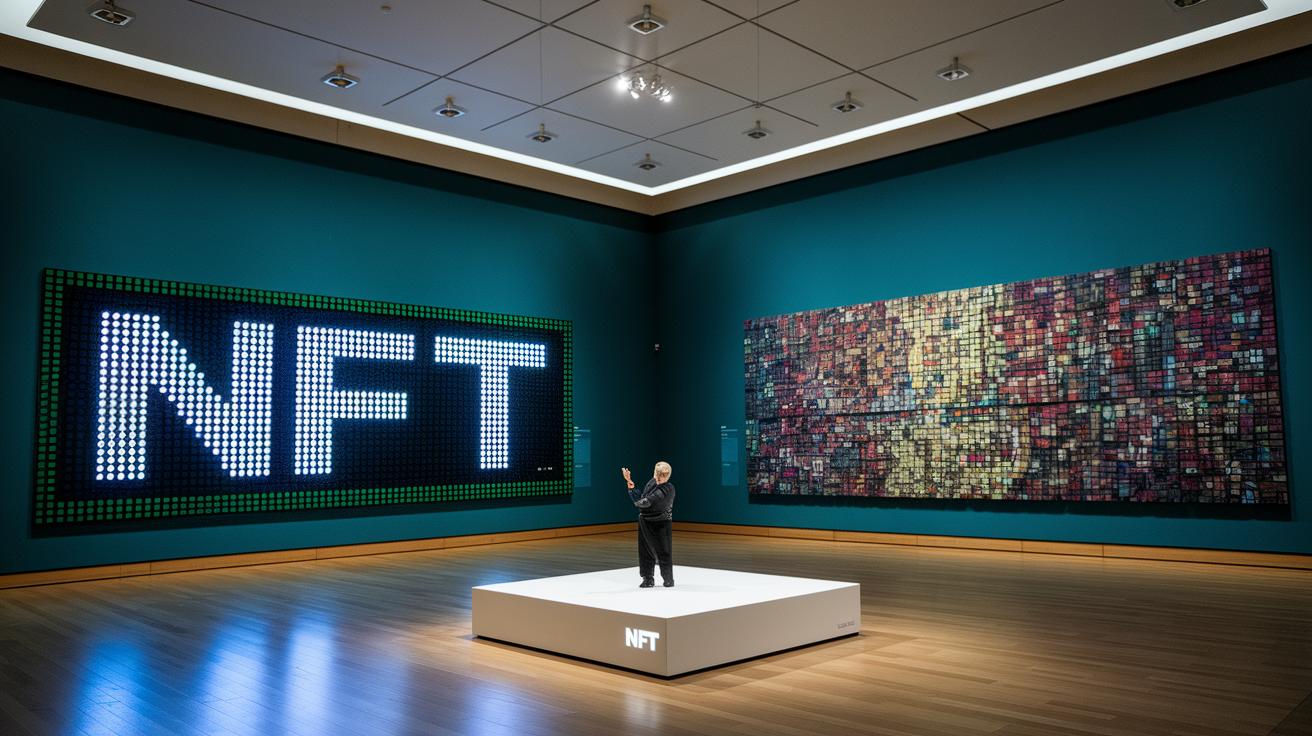
NFT values work a bit differently than what we see in traditional art. When you look at a classic painting, its value often depends on the artist’s name, history, and how beautiful it is. But in the NFT world, things like new tech, how active the community is, and any extra perks or functions play big roles. Think about a digital collectible that changes its price with every new trade – that’s something you don’t get with old-school art.
Traditional art sales, like auctions, are set at specific times, and everything happens then. In contrast, NFT trading runs all day long, with prices bouncing around instantly thanks to automated systems. This non-stop trading means even small shifts in the market show up right away. It offers exciting chances but also brings unique challenges if you’re collecting or investing.
There’s also a new twist when respected institutions jump in. Museums and big collectors, like MoMA when they added 29 digital works, bring a fresh perspective that mixes classic art ideas with the fast pace of digital trading. This blend creates a kind of new recipe for valuing art – one that honors the past while embracing modern tech.
A collector once pointed out that a classic piece of art builds its fame slowly over time, while NFTs get almost instant feedback from the market. It’s a clear sign of how fast and different things are in the digital age.
Case Studies: Blue-Chip NFT Collections and Price Trends

CryptoPunks and Bored Apes really show us how floor prices and extra costs for special traits work together in the digital collectibles world. For example, CryptoPunks hit a high of X ETH in 2021, but now they're at Y ETH. Even though the numbers have shifted, the extra amount paid for unique traits stays at a steady share of the floor price. This steady ratio helps both buyers and sellers agree on what a digital collectible should cost at any time.
Market volume tells another part of the story. In 2021, trading volume soared to $25 billion, showing a time of high demand and buzz. By 2024, the volume settled to around $4.8 billion, suggesting that the market is shifting from quick moves to more steady, reliable performance. Even as the numbers change, the way we evaluate based on supply, scarcity, and trait premiums keeps working well.
| Collection Name | Floor Price (ETH) | Trait Premium Ratio | Transaction Volume (USD) |
|---|---|---|---|
| CryptoPunks | X (Peak 2021) / Y (Current) | Stable Ratio | $25B / ~$4.8B |
| Bored Apes | Variable | Steady Premium | High Liquidity |
| Art Blocks | Mid-range | Consistent Ratio | Robust Activity |
| Mutant Ape Yacht Club | Growing | Fixed Ratio | Significant Volume |
| Meebits | Moderate | Regular Premium | Active Market |
These snapshots show how floor pricing, trait premiums, and market activity work hand-in-hand to set NFT prices. Each part gives clear insights into buyer behavior and the value placed on rare traits. Even when market moods shift, the core valuation method stays effective.
Challenges and Limitations in NFT Price Discovery

NFT pricing struggles with wild swings and low trading volumes. Big price drops, sometimes as steep as 80% from their peak, make it hard to figure out an NFT's true value. Imagine owning a digital collectible that takes an unexpected nosedive overnight, it can really shake your confidence in smaller markets.
Then there’s the confusing world of regulations. Rules about securities, taxes, and anti-money laundering keep investors on edge. Even if a blockchain, a digital record of ownership, confirms your NFT, sudden regulatory changes can quickly erode its value.
Another roadblock comes from oracles, the systems that report NFT prices. They generally do a good job but can sometimes be slow or miss outside factors that affect market prices. This delay means the price you see might not match what the market is really worth. In markets with few trades, even a couple of shady moves like wash trades or quick arbitrage can throw prices off.
Measuring market impact is tricky too. Tools that spot price differences struggle to catch every small manipulation. Studies on blockchain liquidity show that in markets with few buyers and sellers, even a slight gap can lead to big mispricing and weaken trust in the market.
Future Innovations in NFT Price Discovery Mechanisms

Tech is changing how we figure out NFT prices. AI tools now look at past trends to help guess future prices, kind of like checking a weather app but for digital art. VR and AR tools give you a clear view of an asset’s history, which could soon add extra layers of value insight.
Layer 2 solutions such as Polygon, Arbitrum, and Optimism help lower fees and speed up transactions. These blockchain benefits cut costs while making pricing more efficient. In addition, automated market-making methods, powered by decentralized systems and mesh oracle networks, are getting smarter and providing consistent pricing benchmarks.
Think of it this way: soon, systems may adjust prices in just minutes as live data from on-chain transactions flows in. This means clearer and faster price signals for everyone. Before long, these new approaches will make NFT price discovery more precise and attractive to traders.
Final Words
In the action, we broke down auction models, supply-demand shifts, algorithmic approaches, and real-time crypto data, all key parts that shape NFT pricing. We looked at how digital token pricing models and traditional art valuation intersect, highlighted the challenges of thin markets, and peeked at emerging tech trends. This overview reinforces that nft market price discovery mechanisms play a critical role in shaping digital asset values. Stay alert and positive, there’s plenty of opportunity in this dynamic space.