
Have you ever wondered if numbers can reveal hidden secrets in the NFT space? A lot of investors watch simple trends like trading volume and price changes to help guide their decisions. They use easy math to spot past patterns, which can offer clues about future moves.
This method shines a light on clear market signals, helping you decide the best time to buy or sell. It’s a smart way to back up your choices and find promising results, even when the market seems a little confusing.
Applying NFT Statistical Analysis Techniques for Market Insights
When you dive into NFTs, checking trading volumes, price changes, and other market trends is a must for understanding what’s really going on. Investors often turn to NFT analytics to uncover hidden patterns from blockchain transactions and marketplace data, giving a live snapshot of market performance and hints at future gains.
Strong analytics platforms work hard to sift through tons of data. They help you spot trends in digital assets and back up your decisions with clear evidence. By mining token trends, these tools pull useful insights from raw data so you can see which tokens are picking up pace and how prices react to market shifts. And with better prediction tools in crypto, it's easier than ever to track how prices and trading volumes change over time.
Many platforms also mix in extra crypto analysis tools to sharpen these insights. They combine number-based measures with checks on investor vibes to track market sentiment and catch unusual market moves. At the heart of this approach is a mix of simple statistical methods that look at both past and present market data, including:
| Statistical Methods |
|---|
| Descriptive statistics |
| Time series analysis |
| Regression modeling |
| Machine learning approaches |
| Sentiment analysis |
| Anomaly detection |
Together, these techniques form the backbone of NFT market analysis, letting you build a strategy that's driven by solid data and clear market signals.
Descriptive NFT Statistical Analysis Techniques for Art Market Trends

When you're trying to read art market trends, a good starting point is to look at trading volumes and price swings. First, add up all the sale prices and divide by the number of sales to get the average, or mean, which tells you what a typical sale looks like. Then, check the median, the middle value, to see where half the sales are above and half are below.
Next, figure out the mode, which is just the price that shows up most often. This can point you toward those sweet spots collectors really notice. And then there's standard deviation, which shows how much prices stray from the average. A high standard deviation might mean there’s a big mix in art quality or different market opinions.
It helps to visualize all these stats with simple graphs. For example, you can plot rarity on one side and the lowest sale prices (the floor prices) on the other. This way, you can see if rarer art tends to sell for more. In short, these techniques turn raw numbers into clear trends, giving you a solid base for smart, data-driven decisions in the art market.
Time Series NFT Statistical Analysis Techniques for Price Forecasting
Predicting NFT prices can be made simpler with time series analysis. This technique uses a wealth of blockchain data, like the time-stamped records from platforms such as OpenSea. These records show every price change and sale, which helps you pick up on seasonal trends or repeated cycles.
One popular method to forecast NFT prices is the ARIMA model. ARIMA works well with different market cycles and gives you a clear picture by using historical data. Here’s a friendly five-step guide to get you started:
-
Data Preprocessing
Start by cleaning up your raw data from blockchain logs. Convert messy timestamps into clear dates and remove any errors or missing pieces. This helps create a neat trend that you can work with. -
Stationarity Testing
Next, check if your data is “stationary.” This means its average value and spread stay pretty much the same over time. You can use tests like the augmented Dickey-Fuller test to see if your data meets this condition. -
Parameter Selection
Then, choose the best settings for your ARIMA model. Look at charts such as autocorrelation and partial autocorrelation graphs. These help you fine-tune your model so that your predictions come out just right. -
Model Fitting
After that, fit the ARIMA model to your historical data. This step uses past trends to help predict future movements in NFT prices, giving you a glimpse into what might come next. -
Validation
Finally, test your model using new or holdout data. This step ensures that your forecast can handle real market changes accurately.
For more detailed instructions, check out this resource on implementing trend analysis in Excel dashboards.
Regression NFT Statistical Analysis Techniques for Asset Valuation

NFT analytics platforms now offer regression tools that help you link features like rarity score, artist reputation, and trading volume to sale prices. Linear regression is a simple method that fits a straight line through your data, giving you a number that shows how much the sale price might change with a one-unit increase in a feature. For example, a coefficient of 2 on the rarity score could mean that each extra point bumps up the price by $2. Multiple regression takes things further by looking at several features together, so you can figure out which ones really drive the price.
Key ideas come from looking at the coefficients, the R² value, and confidence intervals. The R² value tells you how much of the price change is explained by your model, if it's high, you get a clearer picture of market trends. Confidence intervals give you a range where the true effect of a feature is likely to fall, which adds an extra layer of trust to your analysis.
Best practices include:
| Step | Action |
|---|---|
| 1 | Select features that clearly matter in the market |
| 2 | Validate your models using historical data |
| 3 | Compare outcomes from simple and multiple regressions |
Here’s a fun takeaway: Before regression models were common, many collectors made buying choices based on gut feelings rather than hard data. It’s pretty cool to see how a move toward data-driven decisions has changed the game!
Machine Learning NFT Statistical Analysis Techniques for Ledger Insights
Machine learning is changing the way we look at NFT markets. It uses data from blockchain transactions – think of it as a digital diary of every trade – to help predict price bumps and drops. By training simple neural network models on this data, hidden patterns in trading can be uncovered. For example, one method groups NFTs by how rare they are and their buying history. This simple grouping can hint at which NFTs might be a hidden gem.
Supervised classifiers also provide a neat trick for spotting market moods. These algorithms learn from past trades to tell whether the market is on a bull run or heading for a dip. Imagine using a random forest model that studies historical price changes to predict what’s coming next. With insights like these, you can adjust your strategy as the market heats up or cools down.
Ensemble techniques take it a step further by mixing several models for a more accurate picture. By combining predictions from neural networks, random forests, and boosting models, you get a stronger forecast than using just one method. A good setup might blend three to five different algorithms, each catching a unique bit of investor behavior and liquidity shifts. This mix helps cut down errors and gives a clearer view of NFT price trends.
The real beauty here is how quickly machine learning can handle huge amounts of open data. It turns raw blockchain figures into smart insights at lightning speed. This means you get a smart, automated way to spot promising trends and manage risks in NFT investments.
Sentiment Analysis NFT Statistical Techniques in Collector Communities

Social media platforms like Discord and Twitter are treasure troves of insights about what collectors think of various NFT projects. By using text-mining methods, analysts can sift through chats and turn all that conversation into simple, easy-to-understand numbers. For instance, thousands of messages can be searched for key words or phrases, which are then grouped together to show the overall mood of the community.
Simple sentiment scoring algorithms come into play here. Words like "love" or "exciting" add a positive score, while terms like "disappoint" or "risky" pull the score down. These numbers are compared with blockchain data to check if a burst of positive chatter lines up with rising prices. It’s kind of like noticing that when everyone is upbeat, the market might be about to take off.
This data-driven method really helps investors and community managers spot changes before big market moves happen. A sudden dip or spike in the sentiment index can even give early hints about upcoming trends.
| Key Step | Description |
|---|---|
| Data Collection | Gather community discussions from platforms like Discord and Twitter. |
| Data Cleaning | Organize and tidy up the text data for easier analysis. |
| Sentiment Scoring | Apply simple algorithms that give positive or negative scores based on word choice. |
| Data Correlation | Match the sentiment scores with blockchain price data to find trends. |
By blending on-chain numbers with the real feelings and chatter of community members, we get a clearer picture of how sentiment might drive NFT values and price swings. Isn’t it fascinating how a bit of community buzz can hint at the next big market move?
Case Study: NFT Statistical Analysis Techniques in CryptoPunks
CryptoPunks give us a neat look into how stats can track trends in the NFT world. By checking simple numbers, you can see if a handful of players are in control or if ownership spreads across many folks. This detail often links directly to how wild price swings might get and the feeling of the market overall.
Watching first time buyers is like noticing new faces at a busy fair, it sparks fresh energy, much like new shoppers in a local market. And when you peek at OTC activity, you’re catching a glimpse of serious players making big, off-the-record trades. These moves can quietly signal if a project is standing strong or might be losing some support.
Network analysis uses easy, graph-like methods to map out how digital wallets connect and chat with each other. It’s like checking out the flow of people in a town square, revealing clusters of action or odd trading patterns that might otherwise fly under the radar.
| Metric | Definition | Use Case |
|---|---|---|
| Total Unique Holders | The count of different wallets owning CryptoPunks | Shows if a few people hold most of them and how sensitive prices might be |
| First Time Buyers | New wallets making their debut purchase | Measures fresh interest and hints at growth possibilities |
| OTC Activity | Deals done off the usual exchange through pre-negotiated trades | Helps spot the serious traders who drive strong market moves |
| Network Analysis | Mapping wallet groups and tracking flow between them | Unveils hidden trading communities and unusual patterns |
Using these straightforward methods helps investors get a better read on how CryptoPunks perform, leading to smarter trading decisions.
Tools and Libraries for NFT Statistical Analysis Techniques
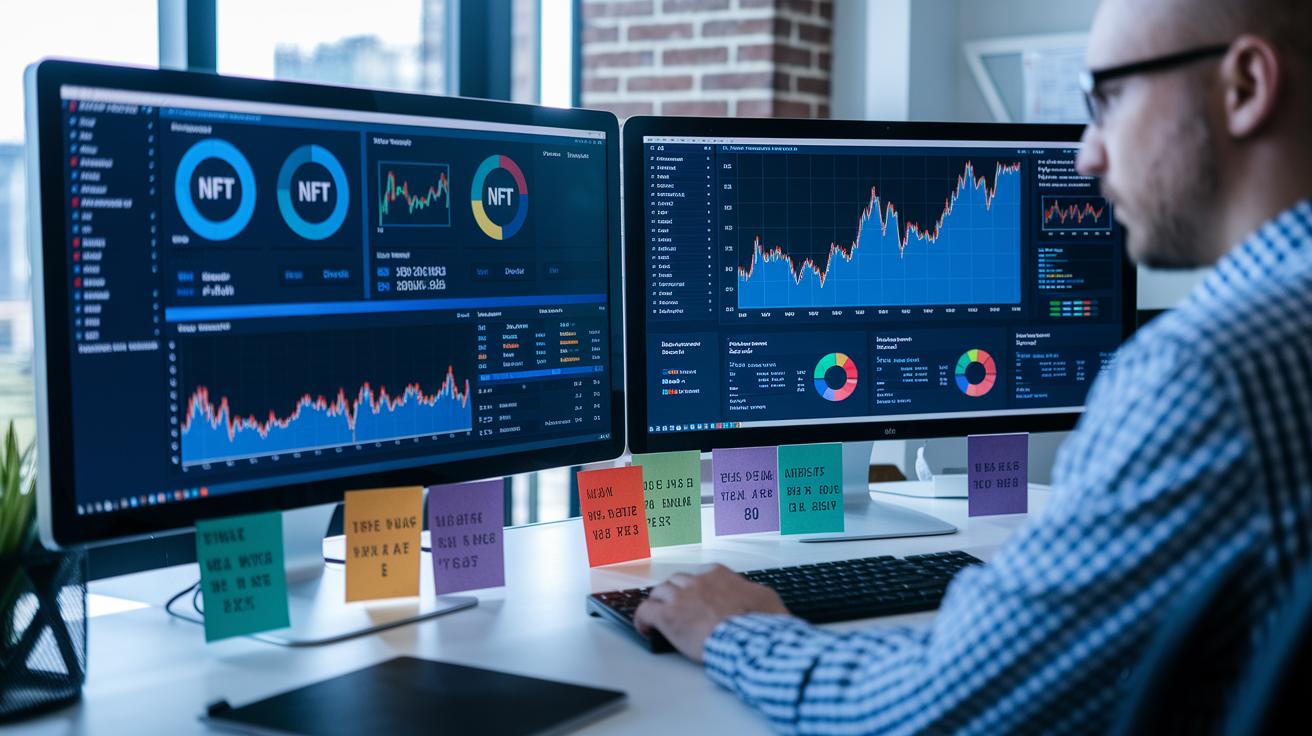
NFT analytics platforms mix big data and smart data storage to pull out on-chain stats. They turn complicated blockchain transactions into friendly dashboards that anyone can follow. This makes it super easy to catch trends and track how collectible assets are doing.
Take Python, for example. Libraries like pandas help sort through transaction logs, while Statsmodels gives you solid routines to dig into trends. And then there’s scikit-learn, which powers machine learning models to forecast market moves. R libraries join the party too, making Python and R must-haves for analysts.
Ethereum API clients such as Alchemy and Infura give you real-time blockchain data. They fetch precise, time-stamped records straight from the blockchain that become the base for your NFT stats. With these APIs, you can even pull live feeds from popular platforms like OpenSea and Rarible through the nft marketplace.
Key tips for setting up your NFT data analytics include:
- Using Python and R libraries to smoothly handle and model data
- Relying on Ethereum API clients like Alchemy and Infura for on-chain data extraction
- Connecting with major NFT marketplaces to power up live dashboards
Each part of this setup helps you turn raw blockchain data into clear and actionable insights. It all adds up to a smart framework for understanding NFT investments and valuing digital assets.
Risk Assessment with NFT Statistical Analysis Techniques
When it comes to NFTs, risk assessment is all about watching price swings and using solid data to brace for market dips. NFT analytics tools let you check out things like standard deviation (a simple way to see how much prices move), Value at Risk (VaR, which estimates potential losses), and drawdowns (the drop from a peak). For example, if an NFT series shows a standard deviation of 15%, it means most price changes generally circle around that number.
Monte Carlo simulation is another cool method to understand risk. It runs tons of simulated price paths based on past results, giving you a glimpse of different future scenarios for your NFT collection. Think of it like tossing a dice a bunch of times to cover every possible outcome. This helps you spot not just potential gains but also prepares you for extreme market shifts.
When setting up your risk dashboard, you might want to include features like these:
| Risk Dashboard Feature |
|---|
| Tracker for daily and weekly price drawdowns |
| Alerts based on VaR thresholds to flag when risk levels spike |
| Graphs showing simulated future price paths |
By using these techniques, you can catch early warning signs of downturns and act fast. In short, turning historical NFT performance into a hands-on strategy gives you a digital toolkit to manage and weather any potential market drops.
Final Words
In the action, we explored ways to transform everyday market data into smart insights. We broke down descriptive, time series, regression, machine learning, and sentiment analysis methods, along with a real case study and top tools to help guide your decisions. We even tackled risk assessment techniques to keep your investments safeguarded. Each section showed how these approaches work together to turn raw numbers into clear signals for the market. Embracing nft statistical analysis techniques can really boost your confidence as you make smart moves in digital assets.
FAQ
What is NFT analysis?
NFT analysis is the study of digital asset data using statistical methods to track price trends, trading volume, and market sentiment, offering investors clearer insights into market performance.
What are the best NFT statistical analysis techniques and are there free options?
NFT statistical analysis uses techniques like descriptive statistics, time series, regression, machine learning, and sentiment analysis; many free platforms offer these tools for data-driven market insights.
What NFT analytics tools are available, such as rarity and icy tools?
NFT analytics tools include platforms that assess rarity, track on-chain data, and provide forecasts, with tools like icy tools helping measure market activity and asset value.
How does NFT analysis apply to Mir4?
In NFT analysis for Mir4, statistical techniques examine in-game digital asset trends to reveal trading patterns, player engagement, and overall collectible performance.
Is NFT worthless now?
NFT value varies with market demand and unique asset traits; analysis indicates many NFTs hold value due to community support and evolving digital usage trends.
What are the three types of NFTs?
The three common NFT types are art, collectibles, and in-game assets, each offering different market dynamics and opportunities for investors.
Are NFTs still relevant in 2025?
NFT relevance in 2025 is maintained by ongoing digital interest, evolving on-chain analysis, and community engagement, proving they continue to attract investors.