
Ever wonder why a small detail can make a token really popular? It all comes down to rarity scores, which are like simple checks that tell us how rare a token is by counting how often each trait appears.
These little design differences can push a token's price higher, making collectors more excited and helping buyers pick smarter. In this article, we break down how these scores work and why they matter so much today.
NFT Rarity Score Analysis: Definition and Importance
NFT rarity score analysis gives each NFT a rank based on how rare its features are. It looks at all the traits in a collection to see which ones stand out. For example, if only 1% of NFTs have a special background, that rare trait can boost demand a lot. Isn't it amazing how one uncommon feature can change the market?
Unique trait combinations catch collectors' eyes and play a big role in an NFT's market value. Every detail, from the accessory or color scheme to the background design, is counted to see how often it appears. When a trait shows up very rarely, it usually means a higher price on resale markets, which is why collectors love these outliers.
Rarity is more than just a number; it acts like a special index showing how an NFT compares to its peers. Collectors use these scores to figure out if an NFT might become more valuable over time, which helps them make smart decisions.
Experts view these scores as a clear hint at an NFT’s potential. For instance, if an NFT has several traits that only appear in less than 2% of the collection, its rarity score is likely high, making it much more attractive. In short, this kind of analysis offers a simple, measurable look at what makes each NFT truly unique.
Calculation Methodologies for NFT Rarity Scores
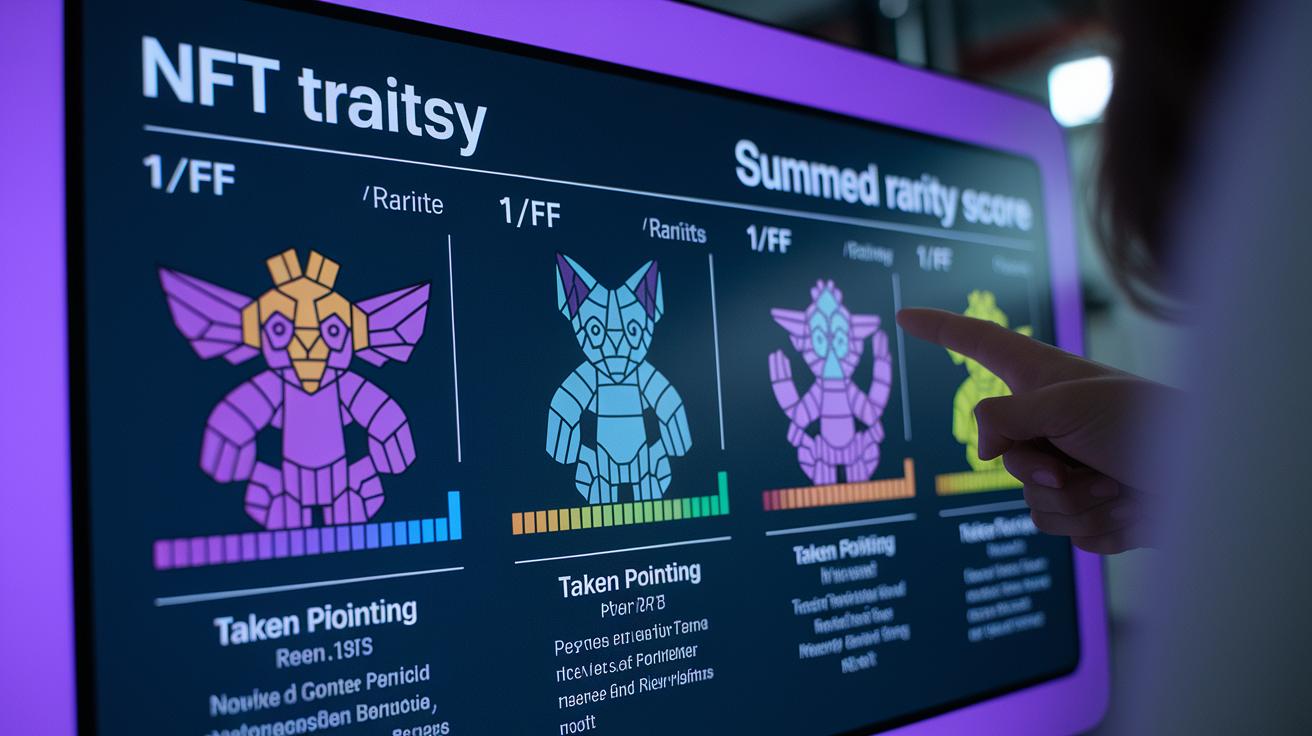
Calculating an NFT rarity score helps us figure out how collectible and unique each token is. One simple way to do this is the summed rarity score. With this method, you take each trait's frequency and use the formula 1 divided by that frequency. So if an accessory shows up in just 5% of the collection, its rarity value becomes 1/0.05, or 20. It’s a clear way to see that rarer traits get higher points!
Another method is the rarest trait ranking system. Instead of adding up all the traits, this approach zooms in on the single most unique feature. For example, if one trait appears in only 1% of tokens, that special attribute can really boost the NFT’s overall appeal. It’s a quick snapshot of what makes the token stand out.
Then there’s the averaging trait rarity method. Here, you calculate the rarity for each trait and then average them out. This gives a balanced look at the NFT’s overall rarity. And to round things off, there’s statistical rarity, where you multiply the probabilities of each trait. This method shows just how unlikely it is to get that exact mix of traits.
| Method | Description |
|---|---|
| Summed Rarity Score | Adds 1 divided by each trait’s frequency to give an overall score. |
| Rarest Trait Ranking | Highlights the single most uncommon feature of the NFT. |
| Average Trait Rarity | Takes the mean of all individual trait scores for balance. |
| Statistical Rarity | Multiplies the probabilities of traits to show overall uniqueness. |
Which method is best really depends on the strategy you have in mind. Each one offers a different window into the collectible value of an NFT. Isn’t it interesting how a single unique trait can sometimes tell the whole story?
Key Metrics and Algorithms in NFT Rarity Score Analysis
Rarity analysis starts with trait frequency. This simply counts how often a certain feature shows up in a collection. When you see an NFT with a unique accessory that only a few tokens have, it might be more valuable. This method lays the groundwork for setting price premiums and gauging collector demand.
Next up is trait count weighting. This looks at how many different traits each NFT holds. More traits can mean a mix of combinations, and even one or two uncommon traits can make an NFT stand out. Investors use this approach to spot digital assets that carry a bit of extra rarity.
Then there’s meta attribute calculation, which digs deeper by grouping rare traits together. This process creates a uniqueness index that shows how much an NFT’s traits differ from the collection average. A high uniqueness index can be a clear hint of future market value, as collectors look for tokens that really break the mold.
Lastly, the scarcity ratio compares the number of unique trait combinations with the total supply in the collection. This ratio is a key part of how tokens are valued in the marketplace. A low ratio often points to an NFT being truly one-of-a-kind. Tools like nft valuation methods (https://nftcellar.net?p=1112) use these figures to give a more detailed look at NFT worth. Together, these metrics form a solid digital scarcity evaluation that sharpens our understanding of NFT rarity and its market impact.
Leading Tools for NFT Rarity Score Analysis
Rarity.Tools gives you a quick view of Ethereum collections with its live ranking interface. It’s easy to use and lets collectors spot tokens with rare traits as they scan the marketplace. This design helps you uncover hidden gems while browsing for those standout pieces.
Rarity Sniper surveys 774 collections across different blockchains using a simple frequency-based ranking system. You can filter and sort tokens by rarity without breaking a sweat. It’s perfect if you want a wide look at rarity scores along with a solid set of filtering options.
Traitsniper keeps you in the loop with real-time alerts on both free and premium plans. It makes sure you never miss your chance to act when a unique collectible comes up. Then there’s PolyRare, which focuses on the Polygon network. Its distribution algorithm filters collectibles by volume, market cap, and floor price, making it a hit with fans of that ecosystem.
For Solana NFTs, HowRare.is turns on the spotlight with owner and volume analytics so you can measure scarcity accurately. Each tool here offers its own way to judge uniqueness, giving you various angles to evaluate value in today’s vibrant digital asset market.
nft rarity score analysis Boosts NFT Value Insight
Imagine being surprised to learn that only 1.5% of the apes in the Bored Ape Yacht Club have golden fur, and these rare apes sell for three times the usual price. This shows how one unusual trait can boost an NFT's value in a big way. Many high-profile collections back up this idea by showing that unique features are a major factor in success.
Take the CryptoPunks collection, for example. Punks with unusual hats, even though it's just a small detail, get about five times the average price compared to those without them. It’s clear that even tiny design elements can make a huge difference.
Then there’s the Cool Cats collection, where certain eye and background pairings lead to a 40% jump in trading activity. This tells us that checking NFT rarity scores is a smart way to judge a collectible's potential.
In real-world sales, the top 10% of the rarest NFTs in any collection often do much better than the common ones. This evidence shows that a well-calculated rarity score not only helps collectors figure out each NFT's worth but also guides investors towards chances for strong returns.
Market Insights: Interpreting NFT Rarity Scores for Investment

NFT rarity scores give us a clear picture of how the market might move. When an NFT lands in the top 10% for rarity, it tends to sell for about two to three times the base price. This shows that even if the overall market is bouncing around, these unique assets may hold their value well.
Liquidity trends add another layer to this story. Rare NFTs usually change hands 25% less often than their common counterparts. In simple words, while common tokens might be traded quickly, the rare ones tend to stay with collectors for longer. This slow turnover can be attractive if you're looking for a more stable, long-term hold.
Investors often mix rarity data with details like floor price, trading volume, and past sales. This well-rounded view helps in understanding a token's true worth and in spotting future trends. Think of it as using all available clues to put together a stronger investment strategy.
So, next time you’re planning your NFT move, taking a good look at those rarity scores could be the best first step toward picking tokens that not only stand out but also match your investment style.
Final Words
In the action, we explored a detailed look at nft rarity score analysis and its role in gauging digital asset value. We broke down key methods for computing scores, highlighted practical tools, and showcased real-market case studies. Each section showed how unique traits shape investment potential and help manage risk. This clear, hands-on guide shows investors that smart strategies in portfolio diversification can boost confidence and market performance. Keep an eye on trends and let informed choices build your success.
FAQ
What is rarity in NFT analysis?
Rarity in NFT analysis means assigning a score based on how uncommon certain traits are within a collection. This score helps determine an NFT’s uniqueness and its potential value in the market.
How do I know if my NFT is rare?
Knowing an NFT’s rarity involves comparing its unique traits with others in the same collection. NFTs with rarer attributes tend to be more appealing to collectors and can command higher prices.
Does NFT rarity really matter when buying or selling?
NFT rarity matters because it often influences market demand and pricing. Rarer NFTs usually attract more interest, which can result in a price premium compared to more common pieces.
What are some free tools or calculators for NFT rarity analysis?
Free tools and calculators evaluate traits by computing frequencies across the collection. They offer a quick way to check an NFT’s rarity score, helping buyers and sellers make informed decisions.
How can I check NFT rarity before a reveal?
Before a reveal, you can use pre-reveal calculators that predict potential rarity outcomes. These tools analyze known attributes and historical data, providing early insight into the NFT’s future uniqueness.