
Have you ever thought about beating crypto chaos with just a few easy-to-read charts? Crypto technical analysis looks at past price moves and visual trends, kind of like reading a map, to give hints about what might come next.
It’s like having a friend point out smart trading spots in a market that often feels like a guessing game. A good chart signal at just the right moment can really boost your confidence, making trading feel less like luck and more like a well-planned move.
This guide shows you how smart charting can lead you to smarter trade choices and help make your trading journey a whole lot clearer.
Crypto Technical Analysis Strategies for Effective Trading

Technical analysis is a tool that helps you understand crypto markets by looking at past price moves and chart patterns. It uses old data and visual charts to spot levels where prices tend to hold steady or bounce back. In other words, it gives a sneak peek into what might come next. Ever notice how a well-timed chart signal can make you feel more confident about your trade?
In the wild world of cryptocurrency, technical analysis cuts through the clutter. It makes complicated data easier to follow by turning it into clear signals that tell you when to jump in or step back. Think of it like having a map when you’re trekking through a busy market. The real value here is that it filters out a lot of extra noise, helping you spot those key turning points.
Here are some of the main ingredients that shape this approach:
- Chart patterns
- Moving averages
- Oscillators and momentum indicators
- Volume trend analysis
- Risk management parameters
Each of these parts works together to build a reliable trading strategy. For example, chart patterns and moving averages show you the history of price moves, while oscillators and volume data back up those trends. And with risk management, you keep potential losses in check. It’s a bit like putting together a balanced meal where every ingredient counts. By blending these technical insights with smart strategies, traders can make choices that really add up.
Chart Patterns and Price Action in Crypto Technical Analysis

Pattern recognition in crypto trading is like spotting familiar road signs that help you decide when to buy or sell. It picks up on repeated shapes in the charts that signal a change in market mood. For instance, when you see a pattern like the Golden Cross, it could mean prices are starting to climb, a good hint that it might be time to consider a trade. This approach helps traders cut through the usual market chaos and focus on important price moves that have worked in the past.
Many traders count on a few standard chart patterns when making decisions. A head and shoulders pattern might suggest that prices are about to reverse. A double top or bottom usually warns you that the current trend could be coming to an end. Ascending and descending triangles often point to the trend continuing, while patterns like flags and pennants typically show that the market is gathering strength before a big breakout. Sometimes, a trader might say, "I see a clear ascending triangle here, this could be a great moment to step in."
| Pattern | Structure | Signal Type | Confirmation |
|---|---|---|---|
| Head & Shoulders | Three peaks | Reversal | Break of the neckline |
| Double Top/Bottom | Two highs or lows | Reversal | Retest of support/resistance |
| Ascending/Descending Triangle | Converging trendlines | Continuation | Break in the trendline direction |
| Flag | Small rectangle | Continuation | Volume surge |
| Pennant | Small, symmetrical triangle | Continuation | Break on the trendline |
Before making any moves based on these patterns, it’s smart to double-check with extra tools like volume indicators or trend markers. When several signals line up together, it gives you more confidence that the move is real and not just a false alarm. By blending chart patterns with additional market data, you build a stronger strategy that can help you make smarter and more secure trades.
Candlestick and Oscillator Techniques in Crypto Technical Analysis
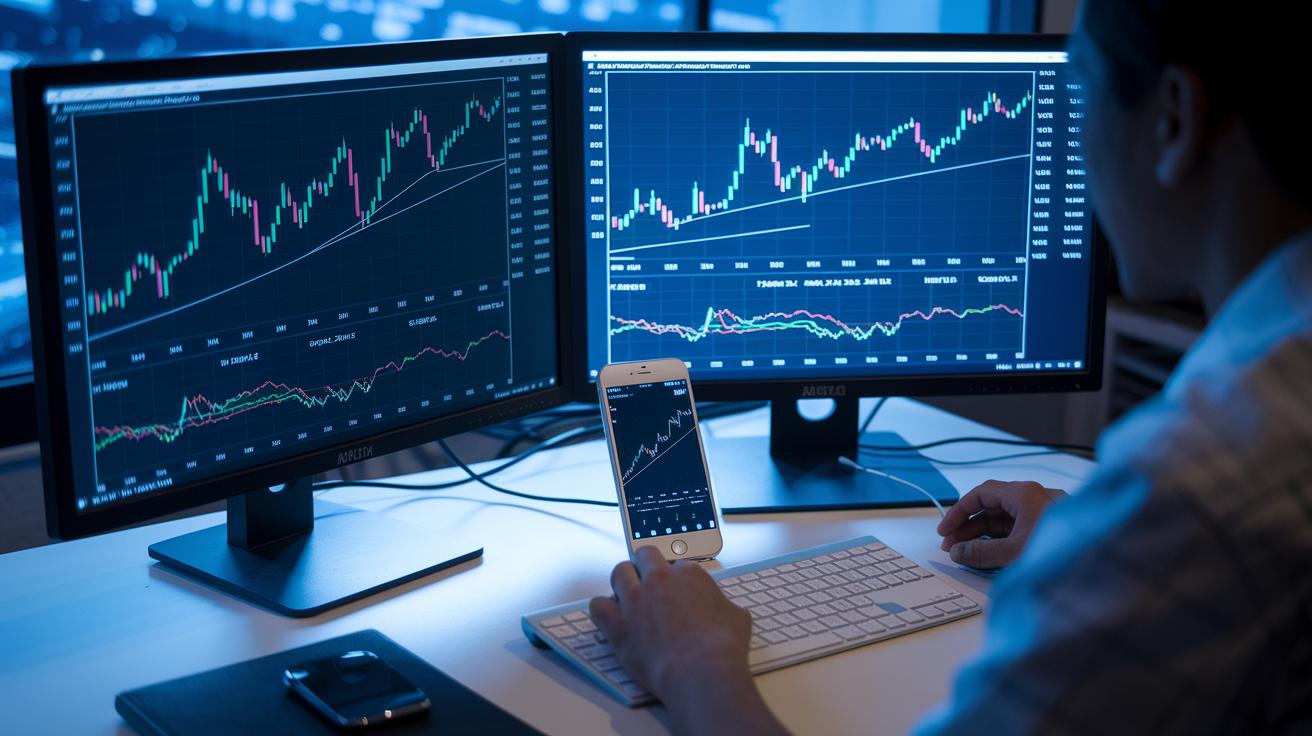
Candlestick patterns are like little pictures that tell you what’s happening in the market. They give you a quick view of trading activity, showing how buyers and sellers are balanced. It’s almost like reading a mood ring, when you see a pattern, you might spot where traders are hesitating or ready to change their minds. Imagine a candlestick that looks like a hammer; its long lower tail and small body hint that a drop might be over and buyers are coming back in, much like a turning point in a lively conversation.
Key patterns include the hammer, doji, and engulfing formations. A hammer usually indicates that buyers might be stepping in after a drop, while a doji, where the opening and closing prices are almost the same, points to uncertainty among traders. Then there’s the engulfing pattern, where one candle completely wraps around the one before it. Picture it like this: after a quiet, tense moment, the mood suddenly shifts, suggesting that the balance might be changing.
On top of that, tools like the RSI and MACD add clear numbers to back up what you see with candlesticks. They help confirm those signals by measuring momentum. For example, if prices hit a new high but the RSI doesn’t, it could be a clue that the trend is running out of steam. This idea, sometimes known as divergence trading, gives you an early hint that things might be about to change. When you combine these oscillators with candlestick patterns, you turn plain data into clear signals that can guide you to better trading chances while steering clear of false alarms.
Moving Average Methods and Trendline Applications in Crypto Technical Analysis

Moving averages work by taking the average of closing prices over a chosen period. This smooths out the daily ups and downs, letting you see the overall trend much clearer. It cuts out the noise so you can focus on what the market is really doing and spot levels where prices might hold or change direction.
Simple Moving Average (SMA)
The SMA simply calculates the average closing price over a set time, like 50 or 200 days. It’s easy to work with and acts like a basic map of where the market might be headed. Since every day’s price is given equal weight, it can be a bit slow to pick up on sudden changes. For example, if you notice a 50-day SMA gradually moving upward, it hints that the overall trend is going up, even if there are sharp short-term swings.
Exponential Moving Average (EMA)
The EMA gives more importance to recent prices. This means it reacts quicker when the market shifts. Imagine looking at a crypto chart and seeing the EMA jump up fast after a price spike; that quick response can help you decide when to enter or exit a trade more promptly.
Weighted Moving Average (WMA)
The WMA also focuses more on recent data by using decreasing weights for older prices. This makes it especially useful when the market is very volatile, as it highlights the current momentum better than the SMA.
Signals like the Golden Cross, when the 50-day SMA crosses above the 200-day SMA, often point to a strong upward trend. In contrast, a Death Cross might be a red flag for falling prices. Trendlines add another layer of insight by marking dynamic support and resistance levels. For instance, Ethereum often bounces off its 100-day EMA. By blending these moving average techniques with trendline checks, traders can build a smart plan for making better trade decisions.
Timeframe Analysis in Crypto Technical Analysis
When you look at crypto charts, different timeframes help you see price changes from various angles. Short time windows, like 1 minute or 15 minutes, let you catch those quick moves, while longer time periods reveal broader trends. It’s like watching the market’s heartbeat, sometimes it races, and other times it moves steadily.
For quick moves, many traders use intraday charts in the 1-minute to 15-minute range. On the other hand, if you’re into swing trading, hourly charts (like 1 hour to 4 hours) do a great job of showing medium-term trends. When you want a big picture view, daily or weekly charts are best. Think of it like the Golden Cross, where a faster-growing 50-day average meets a slower 200-day average, hinting at a lasting shift.
Choosing the right timeframe really depends on your trading style and risk comfort. It makes sense to track minute-by-minute changes for fast decisions while also checking daily or weekly charts if you’re planning for the long haul. Have you ever noticed how blending these views can offer a clearer snapshot of market moves?
By mixing shorter and longer term charts, you get a complete look at the market. This balanced view not only helps you catch small price shifts but also spot the bigger trends, guiding you to make smarter trading choices.
Volume and Momentum Indicators in Crypto Technical Analysis

Volume indicators like On-Balance Volume and Volume Profile give you a clear look at how active a crypto market is by tracking the amount traded over time. They can signal when a burst in trading confirms a genuine breakout instead of a false signal. Imagine prices climbing steadily and then a sudden spike in volume, that jump might be the sign you need to consider a trade. Keeping an eye on these volume trends helps traders back up the price patterns they see on their charts.
Momentum tools, such as the MACD histogram and RSI swings, work nicely with volume indicators. They measure shifts in buying and selling pressure, catching changes in market mood that might not show up on price charts right away. For instance, if the RSI moves from oversold to a neutral level as prices start their steady climb, it suggests that buyer interest is picking up. Combining these momentum hints with volume data gives traders a fuller picture of the market, helping them make smarter, more confident trade decisions.
Risk Management Strategies with Crypto Technical Analysis

When you trade crypto, keeping your money safe is key. One smart way to do this is by choosing the right amount to invest in each trade and using stop-loss orders. In simple terms, a stop-loss is like a safety net, it automatically sells your crypto if it drops below a set level. This helps you limit your losses when the market takes an unexpected turn.
Next, it’s a good idea to set clear take-profit points and check your risk-reward ratio. Knowing when to lock in your gains can save you from a sudden reversal. For example, if you set a ratio where you risk one unit to earn three, you put a system in place that guides you when to exit a trade and secure profits.
Mixing several technical signals with a firm exit plan is another practical approach. Using tools like candlestick patterns, moving averages, and oscillators can help you decide the best moments to enter or exit a trade. Many traders rely on these signals to fine-tune their strategies. When you combine these techniques with broader crypto trading strategies, like the ones you can check out at this resource, you build a strong plan to handle the ups and downs of the market.
Final Words
In the action, this article broke down trading fundamentals by exploring everything from chart patterns to candlestick signals and moving averages. It showed how to use timeframes and watch volume surges to spot market shifts.
Risk limits were placed front and center, with smart stop-loss strategies and measured exit points discussed to protect your investments.
With crypto technical analysis as your guide, you can confidently mix these tools to create a sharper, more focused digital asset strategy.
FAQ
Q: What free crypto technical analysis resources are available, such as books, PDFs, websites, or apps?
The question about free crypto technical analysis resources covers books, PDFs, websites, apps, and Reddit groups. These options provide varied materials and community tips to boost your trading skills.
Q: What is the best technical analysis for crypto?
The best technical analysis for crypto combines chart patterns, moving averages, oscillators, volume tracking, and strict risk management to guide trading decisions and predict market trends.
Q: Can you use technical analysis for crypto?
Using technical analysis for crypto means studying past price movements, reading signals like support or resistance, and applying indicators to forecast trends and plan trades effectively.
Q: What is the 1% rule in crypto?
The 1% rule in crypto advises risking only 1% of your overall investment on a single trade, which limits losses and helps manage risk in volatile markets.
Q: Can you make $100 a day with crypto?
Making $100 a day with crypto is possible through careful technical analysis and disciplined trading, though achieving consistent gains depends on market conditions and robust risk control.
Q: Are crypto technical analysis jobs available?
Crypto technical analysis jobs are available for those skilled in chart reading and trend forecasting, offering opportunities in trading desks, research firms, and digital asset management teams.